


Welcome to the beautiful, slightly chaotic, world of getting ready for your baby. Let's be honest, nesting is a real thing. But creating a perfectly organized nursery isn't just about making it look like a picture on Pinterest—it's about building a calm, functional sanctuary for you and your little one. The best nursery organization ideas all start with one core concept: creating smart zones so everything you need is right where you need it, when you need it.
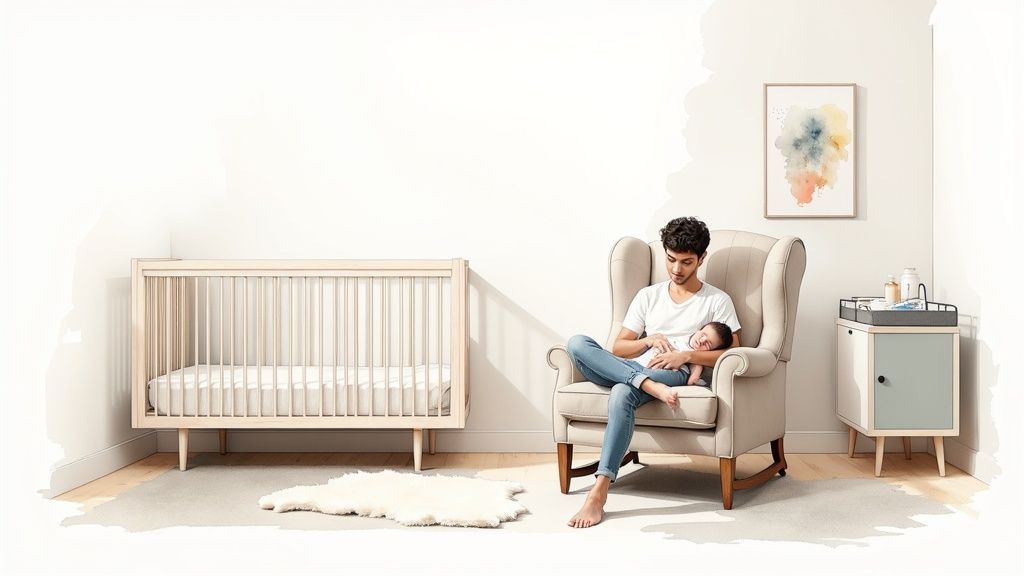
Creating a Calm Oasis with Smart Organization
A nursery that's been thoughtfully put together can be a game-changer. It can genuinely lower your stress levels during those hazy 3 AM wake-up calls and make the daily routines feel almost second nature. You're aiming for a space where function and peace coexist, so you aren't fumbling for a diaper or searching for a clean swaddle in the dark.
This drive for calm, functional spaces isn't just a fleeting trend. The global nursery furniture and bedding industry was valued at an estimated USD 10.9 billion in 2025. That's a huge number, and it points to what modern parents are looking for: smart, multifunctional, and space-saving furniture to create nurseries that just work. You can dive deeper into these nursery market trends on Future Market Insights.
The Foundation of a Functional Nursery: Start with Zones
Before you even think about putting together that crib or picking out wall decals, take a moment to map out the room. The secret to a nursery that flows beautifully is thinking in terms of "zones." This simple mental shift gives every single item a logical home and makes the whole organizing process feel less overwhelming.
To get started, just think about the main things you'll be doing in this room:
- Sleeping Zone: This is the crib's territory—a quiet, safe, and tranquil spot.
- Changing Zone: Your mission control for all things diapers and clean-ups.
- Feeding Zone: A cozy corner with a comfy chair, dedicated to nourishment and bonding.
Here’s a quick breakdown to help you visualize it.
Essential Nursery Zones at a Glance
| Zone | Primary Function | Key Items to Store Here |
|---|---|---|
| Sleeping | Creating a safe, calm, and dark environment for rest. | Crib, bassinet, blackout curtains, sound machine, baby monitor, swaddles. |
| Changing | Efficient and hygienic diaper changes and getting dressed. | Changing table/pad, diapers, wipes, diaper cream, diaper pail, clean clothes. |
| Feeding | Comfortable and quiet bonding time during feeds. | Glider or rocker, side table, burp cloths, nursing pillow, bottle warmer, Moogco Silver Nursing Cups. |
| Playing/Reading | A dedicated space for developmental play and storytime. | Soft rug or play mat, low-profile toy storage, bookshelf, engaging toys. |
By sketching out these areas first, you're building a natural workflow that will make every task that much easier.
This foundational step is what really transforms a plain room into a true haven. For more ideas on how to pull the whole look together, check out our guide on decorating your baby’s room with soothing colors and practical furniture. Trust me, a well-organized room isn’t just another project to check off your list; it’s one of the best gifts you can give your new family.
Designing Your Nursery’s Workflow
Before a single piece of furniture is built, let's take a moment to think like a designer. The best nurseries aren't just cute; they're smart. They flow. The secret is to plan the room around your main activities, which boils down to creating a natural path between three key zones: sleeping, changing, and feeding.

Thinking about the room this way saves you from that frantic, middle-of-the-night scramble across the floor. It’s all about making your movements logical and your supplies easy to grab, so your focus stays right where it should be: on your baby.
Curated picks for the room you'll live in
Build a calm, beautiful nursery
Take 20% off at checkout, applied automatically when you shop through this link.
Shop with BABY20 →Free US shipping over $100. Code applies automatically at checkout.
The Sacred Sleep Zone
First things first, let's map out the sleep zone. This area is anchored by the crib or bassinet and should feel like the calmest, most serene spot in the entire room.
Safe crib placement is the absolute top priority. The American Academy of Pediatrics is clear on this: the crib needs to be away from windows, blinds, and any cords. It’s a simple rule that eliminates a lot of potential hazards.
The goal here is to create an environment that whispers "rest." Think about adding blackout curtains to manage light for daytime naps and a sound machine to drown out the doorbell or a barking dog. Keeping this space free of clutter and over-the-top stimulation helps turn it into a true sanctuary dedicated to sleep.
The Efficient Changing Station
Next up is what I like to call the "command center" for diaper changes. Trust me, you'll be spending a lot of time here, so making it efficient is a gift to your future self. Whether you opt for a dedicated changing table or a dresser with a changing pad on top, the golden rule is to have every single essential within arm's reach. You can't just walk away mid-change, so you have to be prepared.
Make sure your station is stocked with:
- Diapers and Wipes: Have a generous stack ready to go in a caddy or the top drawer.
- Creams and Ointments: Keep diaper rash cream and any other go-to lotions right there.
- A Backup Outfit: For those inevitable blowouts, have at least one clean onesie nearby.
- Diaper Pail: Position it right next to your changing spot for a quick, one-handed toss.
Trying to figure out the perfect setup can feel like a huge decision. If you're stuck, you can learn more about whether you need a changing table and how to choose the right one to make this zone work for you.
The Cozy Feeding Corner
Last but certainly not least, let's create a comfortable feeding corner. This little nook is all about connection and nourishment. A supportive glider or rocker is a must, along with a small side table for your water bottle, phone, and snacks. Soft, gentle lighting also makes a world of difference during those late-night sessions.
This is also a spot where having a well-organized station can be a lifeline, especially when you hit the inevitable bumps in your feeding journey.
One mom, Sarah, told me how her organized feeding corner completely turned things around for her. "I was struggling with so much soreness and was honestly close to giving up on breastfeeding. Just having my comfy chair, my water, and my Moogco Silver Nursing Cups all right there made those tough feeds more manageable. The silver nursing cups gave me this incredible, natural relief and helped my skin heal between feedings. They're the reason I was able to push through and keep going."
Sarah's story is the perfect example of how a well-planned space—with the right tools like silver nursing cups—does more than just keep you organized. It supports your own well-being. By thoughtfully designing these zones, you’re creating a nursery that truly works for you, making the day-to-day feel just a little bit smoother.
Picks From This Story
Picks related to this guide, ready to ship from Moogco.
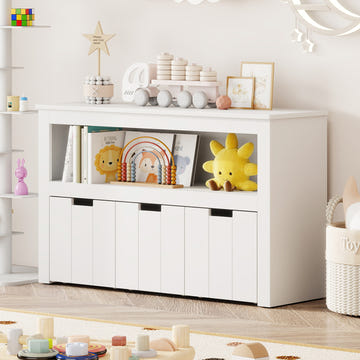
Kid Toy Storage Cabinet 3 Drawer Chest with Wheels L...
$109.99
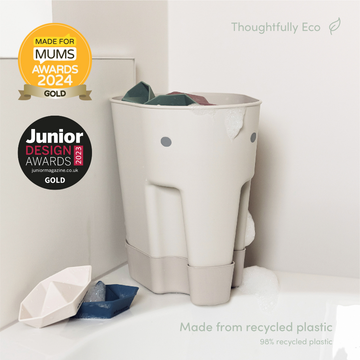
Shnuggle Ellie Bath Toy Drying Caddy | Freestanding ...
$29.95
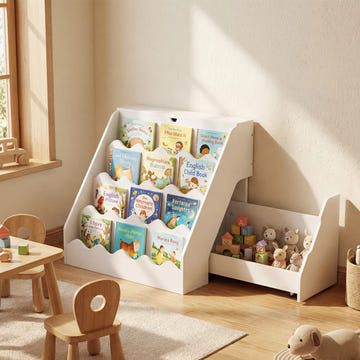
2-In-1 Kids Bookshelf & Toy Storage Organizer - Mult...
$85.99
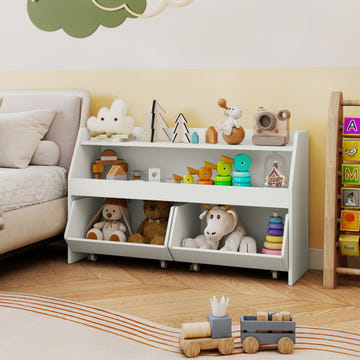
Kids Toy Storage Organizer Wooden Bookcase with 2 Mo...
$65.99
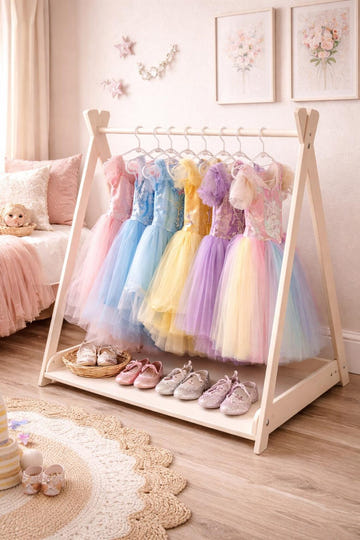
TILLY- Clothing Rack
$165.00
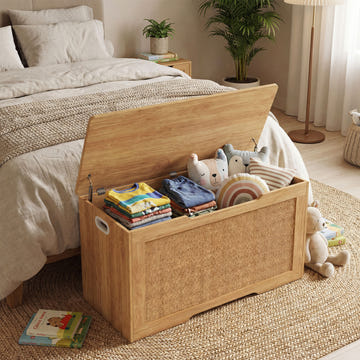
Kids Storage Bench 40 Inch Toy Box with Flip Top and...
$115.99
Mastering Nursery Storage Solutions
A tiny person somehow comes with a mountain of stuff, doesn't it? Finding a home for every last swaddle, onesie, and toy can feel like playing a game of Tetris you just can't win. But conquering the clutter is all about having smart, specific storage solutions for each type of item. This is where you move beyond just buying a bunch of generic bins and start creating a system that actually works for you and your baby.
The trick is to think category by category. For clothing, drawer dividers are an absolute lifesaver, turning a chaotic jumble into neat, visible rows. I’m a huge fan of rolling tiny clothes instead of folding them—it saves a surprising amount of space and lets you see every adorable outfit at a glance.
Then you have the things you need constantly, like diapers and wipes. Accessibility is everything here. A standard changing table is great, but a lot of parents I know swear by a simple rolling cart. You can load it up with all your diapering essentials and wheel it wherever you need it, from the nursery to the living room. It's a total game-changer.
This simple diagram helps visualize how to think about your nursery's core functions when you're planning the layout.
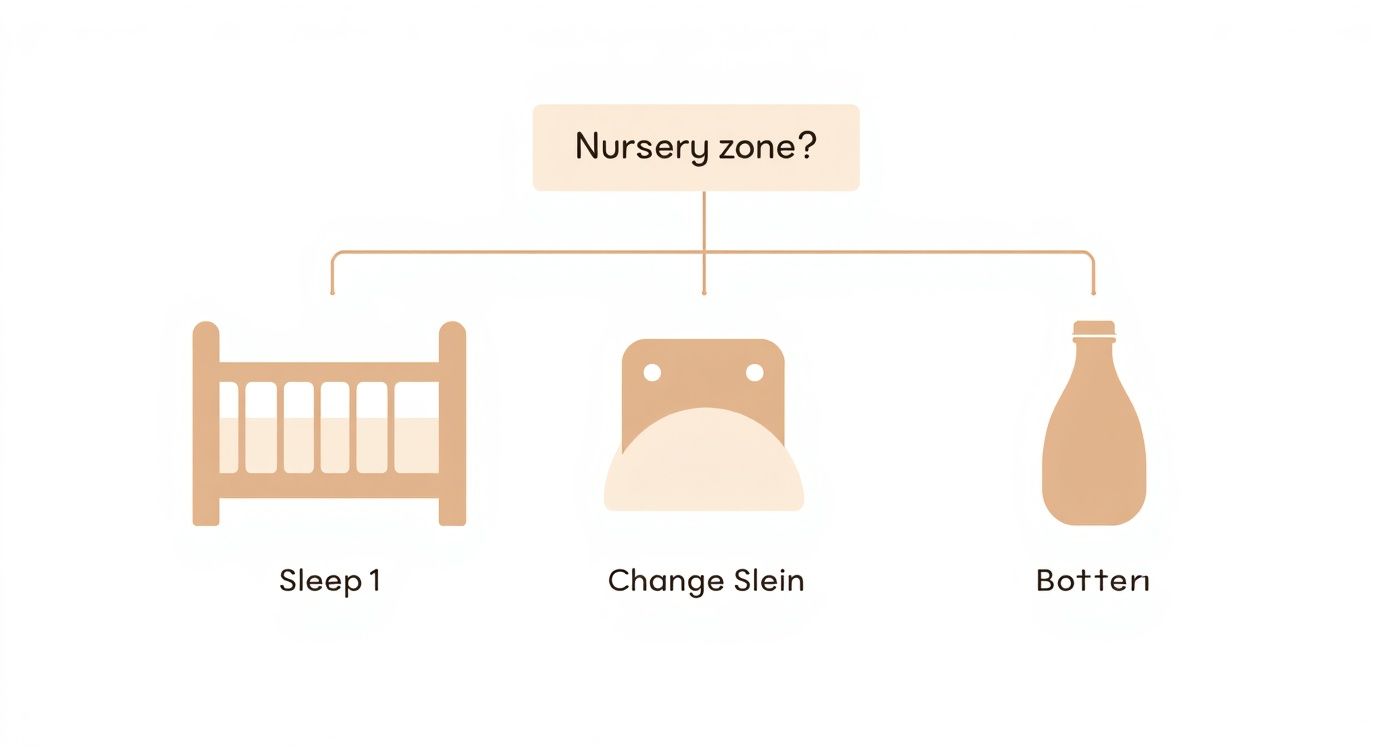
It’s a great reminder that every organizational choice should really tie back to one of the nursery's three main jobs: sleeping, changing, or feeding.
Taming Toys and Treasures
Toy storage is a whole different ballgame. You need something that's easy for you to manage now but will also be easy for your little one to use as they grow. Low-profile cube shelves with soft fabric bins are perfect for this. They keep toys contained and off the floor, and eventually, they make it simple for a toddler to help with cleanup time.
For more inspiration on how to manage the influx of baby gear, you might want to check out some clever nursery storage ideas. Thinking outside the box with your containers can make a huge difference in keeping the room functional and calm.
I see this all the time: parents buy storage that looks beautiful but is totally impractical. A gorgeous woven basket with a fussy lid is a nightmare to open with one hand while holding a squirming baby. Always prioritize function first—stick with open-top bins and baskets for frequently used items like burp cloths and swaddles.
Choosing the Right Storage for Your Nursery
With so many options out there, from fabric bins to clear acrylic containers, it can be tough to decide what to buy. The right container for toys isn't necessarily the right one for tiny baby socks. Here's a quick rundown to help you choose the best options for your space and needs.
| Storage Type | Best For | Pros | Cons |
|---|---|---|---|
| Fabric Bins/Baskets | Toys, blankets, stuffed animals, laundry | Soft, lightweight, and kid-friendly; come in many styles. | Can lose their shape; not stackable unless in a cube shelf. |
| Drawer Dividers | Onesies, socks, bibs, burp cloths, toiletries | Maximizes drawer space; keeps small items from getting lost. | Can be flimsy; requires measuring for a good fit. |
| Rolling Cart | Diapering supplies, feeding station essentials, bath items | Mobile and versatile; keeps everything within arm's reach. | Can look cluttered if not organized; takes up floor space. |
| Clear Plastic Bins | Out-of-season clothes, extra supplies, sentimental items | See contents at a glance; stackable and protects from dust. | Can look clinical; plastic can crack over time. |
| Wall Shelves | Books, decorative items, monitors | Utilizes vertical space; keeps items out of a baby's reach. | Requires installation; not ideal for frequently used items. |
Ultimately, the best approach is usually a mix-and-match system. Use clear bins for long-term closet storage and soft, accessible baskets for the things you and your little one will be reaching for every single day.
A Success Story in Smart Organization
Sometimes, the best organization hack isn't about the container—it's about having the right tool in the right place, especially during those challenging newborn moments. A well-stocked feeding station, for example, can make a world of difference.
Take the story of a new mom, Jenna, who was struggling with breastfeeding discomfort and was on the verge of giving up. Her solution was purely organizational. She created a small caddy for her rocking chair with all her essentials, including her Moogco Silver Nursing Cups.
By keeping these soothing silver nursing cups right where she needed them, she could get quick, natural relief after every single feed. This helped her skin heal and made the entire experience so much more bearable. That simple act of organization—placing a crucial tool within arm's reach—gave her the support she needed to continue her breastfeeding journey. It’s a powerful reminder that smart storage isn’t just about being tidy; it's about making your life easier.
For a complete checklist of what you might need to stock (and organize!) in your nursery, have a look at our guide to baby nursery must-haves. It’s a great starting point for planning your storage from day one.
Space-Saving Hacks for Small Nurseries
Working with a small room? Don't sweat it. A cozy nursery can be just as functional—and honestly, sometimes even sweeter—with a few clever tricks up your sleeve. When floor space is the hot commodity, the name of the game is thinking vertically and making sure your furniture pulls its weight.
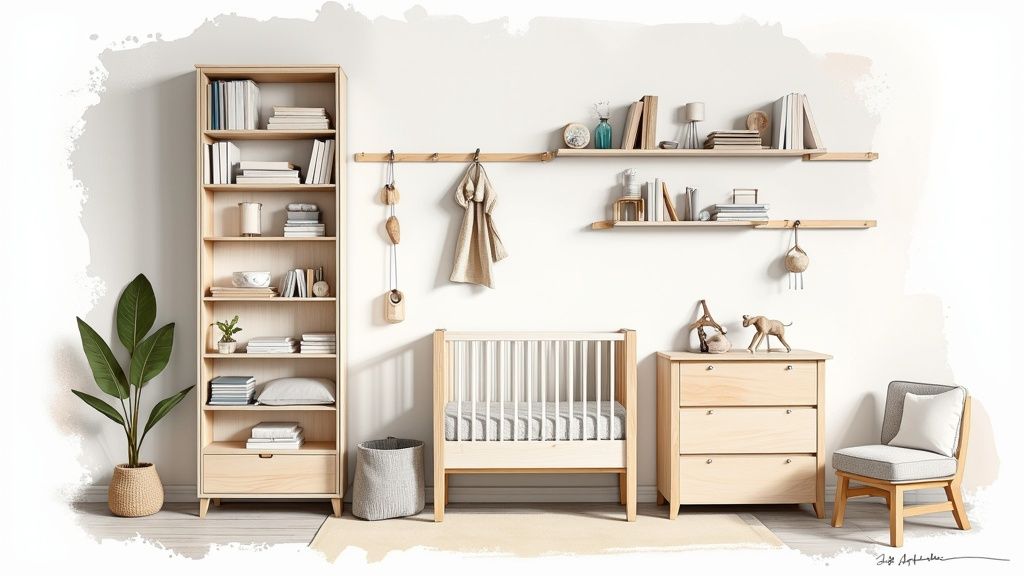
The real secret is to maximize every single inch you have without making the room feel cluttered or cramped. You can totally pull this off by drawing the eye upward and choosing pieces that work smarter, not harder.
Go Vertical with Wall Storage
When you can't build out, you have to build up. I can't stress this enough: using your walls is the single most effective way to reclaim precious floor space in a tiny nursery.
- Floating Shelves: These are an absolute must. They're perfect for books, cute keepsakes you want to display, and keeping things like baby monitors or sound machines safely out of reach.
- Tall, Slender Bookcases: A narrow bookcase takes up a tiny footprint but gives you a ton of storage in return. Think baskets of toys, stacks of diapers, or neatly folded blankets.
- Over-the-Door Organizers: This is the unsung hero of small-space living, for real. A simple pocket organizer hung on the back of the nursery or closet door is the perfect spot for shoes, rolled-up swaddles, or all your diapering odds and ends.
Choose Multi-Functional Furniture
In a small nursery, every single piece of furniture needs to earn its keep by serving more than one purpose. Getting into this mindset is what will keep your space feeling open and functional.
A classic move is using a sturdy dresser as your changing table—just add a secure changing pad on top, and you've combined clothing storage and diaper duty into one. Easy. You can also find some fantastic cribs that come with built-in drawers underneath, which is the ideal hideaway for extra bedding and sleep sacks. If you're looking for more inspiration, you can explore options in our complete guide to the best baby furniture to find pieces that fit your space perfectly.
And it’s clear that families are putting a lot of thought into their homes right now. The U.S. nursery and garden stores industry is projected to hit $50.1 billion in 2025, a trend fueled by people investing more in their living spaces. This really shows how much we all want to create beautiful, functional homes, and a well-organized nursery is a huge part of that.
A Breastfeeding Success Story
Sometimes, the best organization hack isn't a new bin or basket—it's about having exactly what you need, right where you need it, especially during those hazy newborn days. A well-stocked feeding station, for example, can be a total game-changer for a mother's breastfeeding journey.
Take the story of a new mom, Jenna. She was really struggling with breastfeeding discomfort and was on the verge of giving up. Her solution was purely organizational. She created a small caddy for her rocking chair with all her essentials, including her Moogco Silver Nursing Cups. By keeping these soothing silver nursing cups right there, she could get quick, natural relief after every single feed.
That simple act of organization—just placing a crucial tool within arm's reach—gave her the support she needed to keep going on her breastfeeding journey. For more brilliant ways to maximize every inch, check out these clever small space storage ideas that you can adapt for any room.
More Related Picks
A few more favorites from the same collection.
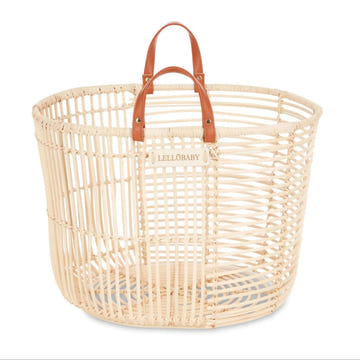
LELLOBABY™ - Which-Way Handwoven Rattan Storage Basket
$79.00
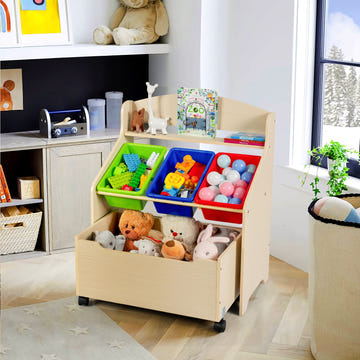
Kids Wooden Toy Storage Unit Organizer with Rolling ...
$65.99
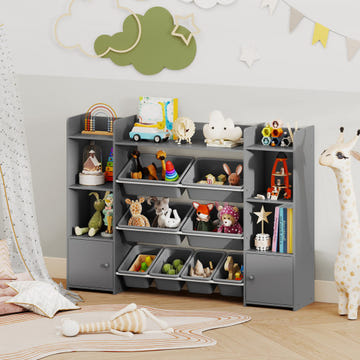
56 inch Large Toy Storage Organizer with 8 Removable...
$125.99
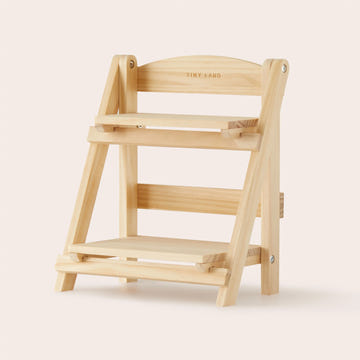
Tiny Land® Play Kitchen Accessories – Play Kitchen F...
$34.99
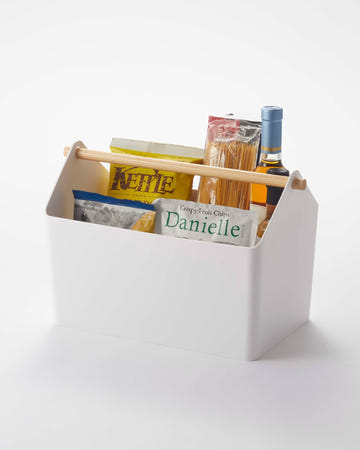
Storage Caddy
$38.00
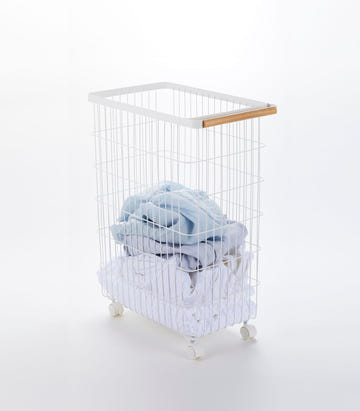
Rolling Wire Basket (24" H) - Steel + Wood
$145.00
Creating a System That Grows with Your Child
Anyone who’s had a baby knows they grow in the blink of an eye. One minute you’re folding impossibly tiny newborn onesies, and the next, you’re wondering where on earth you’re going to put all the 12-month outfits you just got. A static, one-and-done organization system just won’t work.
What you really need is a flexible system that can adapt as your child hits each new milestone. Thinking ahead like this saves you from having to completely overhaul the nursery every few months. It's about creating a living, breathing system, not just a one-time project.
The Clothing Rotation Strategy
The most pressing challenge you'll face is the constant flow of new clothing sizes. Trust me, an effective clothing rotation strategy is your best friend for keeping overflowing drawers and a chaotic closet at bay.
The method is simple but a real game-changer. Grab a set of matching, stackable storage bins—I love the clear ones because you can see what’s inside at a glance. Label them clearly by size: "0-3 Months," "3-6 Months," "6-9 Months," and so on.
As soon as your baby outgrows an outfit, toss it into its designated "outgrown" bin. When it's time to move up to the next size, you just pull out the new bin, give everything a good wash, and stock the dresser. This little swap system keeps current sizes handy while neatly storing outgrown clothes (or future hand-me-downs) without a massive reorganizing effort.
A Success Story From One Mom
Sometimes, a great organizational system does more than just control clutter—it can be a real lifeline. A new mom named Sarah shared a story with us about how her setup helped her through a tough time with breastfeeding.
"I was really struggling with soreness and was ready to give up. My solution was creating a small, organized caddy next to my feeding chair. I kept everything I needed right there, including my Moogco Silver Nursing Cups. Having those silver nursing cups within arm's reach for immediate relief after each feed was a lifesaver. It helped me heal and made it possible for me to keep going."
Sarah's experience really shows how simple organization, like keeping essential tools like silver nursing cups nearby, can make all the difference. You can learn more about how these natural, simple tools work over at the Moogco Silver Nursing Cups website.
Applying the System to Toys and Beyond
This "grow-with-me" approach works beautifully for toys, too. Instead of having every single toy out at once, which can be super overwhelming for a little one, try a toy rotation. Keep a small selection of age-appropriate toys out and store the rest.
Every few weeks, swap them. This keeps playtime feeling new and exciting, prevents the room from turning into a toy explosion, and gives you a clear look at what your child is truly interested in at each stage. As they grow, this system will evolve right along with them, just like when it's eventually time to transition from a crib to a toddler bed.
Answering Your Top Nursery Organization Questions
Let's be real—even with the best-laid plans, questions are going to pop up as you start putting the nursery together. Getting solid, straightforward answers can be a game-changer, swapping that feeling of overwhelm for a boost of confidence. Here are a few things parents often ask when they're in the thick of organizing the nursery.
When Should I Really Start Organizing the Nursery?
The second trimester is often the sweet spot. For most, that's when energy levels are at their peak, and you have enough time to browse, buy, and build without feeling the pressure of a looming due date.
A good goal is to have the big pieces—the crib, the changing table, the main storage furniture—in place by the 30-34 week mark. That way, the last few weeks can be for the fun stuff, like washing tiny clothes, stocking up on diapers, and adding all those final decorative touches.
How Do I Organize a Nursery Without Breaking the Bank?
You can absolutely create a functional, beautiful nursery on a tight budget. The secret is to think multi-functional. A sturdy dresser that doubles as a changing station (just add a changing pad on top!) is a classic for a reason—it saves both space and money.
Don't be shy about checking out thrift stores or online marketplaces for gently-used furniture and decor. You can also get creative with some simple DIYs. Think decorated shoeboxes as drawer dividers or basic floating shelves for books and toys. Focus on the essentials first; you can always add more down the road.
What’s the Best Way to Deal With All the Gifts and Hand-Me-Downs?
It’s a wonderful problem to have, but the mountain of gifts and hand-me-downs can get out of control fast. My best advice? Set up a "sorting station" in a corner of the nursery or even another room as things start to arrive.
As you get a new outfit, snip the tags, run it through the wash, and immediately put it into a labeled bin by size: 0-3M, 3-6M, and so on. For bigger gear and toys, decide what you'll use now and what can be stored away. Taming the chaos as it comes in prevents a massive pile-up later.
A Real Story From a Mom Who’s Been There
Even in a perfectly organized room, the newborn days are tough. One mom, Jessica, told us how having just one thing in the right place made all the difference in her feeding journey.
"The pain was so intense I was about to quit. My saving grace was a small basket next to my glider that held my water, snacks, and my Moogco Silver Nursing Cups. Being able to grab the silver nursing cups for immediate, natural relief after every feed was what got me through. It’s the reason I kept breastfeeding."
Jessica’s experience is such a great reminder that sometimes, organization isn't about having a picture-perfect room. It's about having that one crucial support item exactly where you need it, right when you need it most.
Here at Moogco Baby, we know that the right products can make all the difference. See for yourself how the natural, soothing relief of our Moogco Silver Nursing Cups helped Jessica and so many other new moms.
Bring this guide home with 20% off.
Use code BABY20 for 20% off →
Featured pick from Moogco
Animal Print Joggers - Peel & Stick for Nursery - Non-Toxic
$21.99
Shop this pick → Frequently Asked Questions
How many diapers should I actually keep in the nursery at once?
A good rule of thumb is to keep about a week's supply in the nursery itself, which typically means 70 to 80 diapers for a newborn. Store the bulk of your diaper stash in a closet or under the crib, and just restock your changing station caddy or drawer every few days. This keeps the space from feeling overwhelmed while ensuring you never run out mid-change.
Should the crib go against a wall or in the center of the room?
The crib can go against a wall as long as it's away from windows, cords, and anything your baby could grab. Placing it against a wall actually frees up floor space and can make the room feel less cluttered. Just make sure you can easily access at least one long side for safe, comfortable lifting and laying down your baby.
What's the ideal height for a changing table or pad?
The changing surface should be at a height that lets you change diapers without bending over or straining your back, typically around 36 to 40 inches from the floor. This is especially important in 2026 as more parents are thinking about postpartum recovery and long-term ergonomics. If you're using a dresser with a pad on top, measure it before committing to make sure it works for your height.
Can I use open shelving in a nursery or is it too messy looking?
Open shelving can look amazing and be super functional if you use matching bins, baskets, or fabric cubes to contain smaller items. The key is grouping like items together and labeling everything so the shelves stay tidy. It also makes grabbing what you need during those bleary-eyed moments so much easier than digging through closed cabinets.
Where should I put the diaper pail to avoid smell issues?
Place the diaper pail as close to the changing table as possible so you can toss diapers without stepping away, but ideally near a window or vent if your layout allows. Keeping it sealed and emptying it every two to three days makes the biggest difference in controlling odor. Avoid putting it right next to the crib or feeding chair where you spend calm, quiet time.
How do I organize baby clothes by size when they grow so fast?
Use drawer dividers or separate bins labeled by size, and keep only the current size plus the next size up in the main nursery drawers. Store future sizes in a closet or under the crib in labeled containers, and rotate them in as your baby grows. This prevents drawer overload and makes getting dressed so much faster.
Is a glider really necessary or can I use any comfortable chair?
You don't absolutely need a glider, but having a chair with good back support, armrests, and a gentle rocking or gliding motion can make those long feeding sessions and middle-of-the-night soothing so much more comfortable. Many parents say the glider becomes their favorite spot in the house. If budget is tight, a supportive armchair with an ottoman can work just as well.
What should I keep in my feeding zone besides the chair?
Stock your feeding zone with a small side table to hold your water bottle, phone, snacks, and any nursing or feeding supplies like burp cloths, a nursing pillow, and Moogco Silver Nursing Cups if you're breastfeeding. A small basket on the floor next to the chair is perfect for extras like pacifiers, a muslin blanket, or a book. The goal is to have everything within reach so you never have to get up mid-feed.
From Moogco Studio
Printable and personalized nursery essentials. Designed by moms for moms.


Doing the walls?
Paint is a commitment, and most of us are working around a lease or a mind that is not made up yet. These are the removable options, sized to your wall.
About the Editor
Eda Ulger is the editor at Moogco Baby and a mom of two. She curates and edits our guides so every piece is honest, practical, and genuinely helpful for the early days of motherhood.
Shop This Story
Picks related to this guide, ready to ship from Moogco.
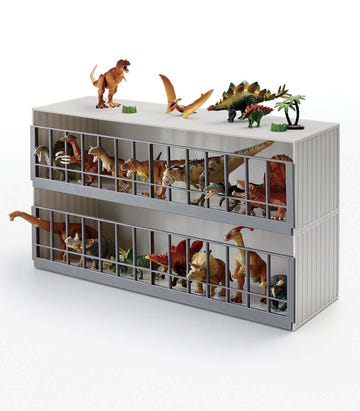
Toy Display Case
$40.60
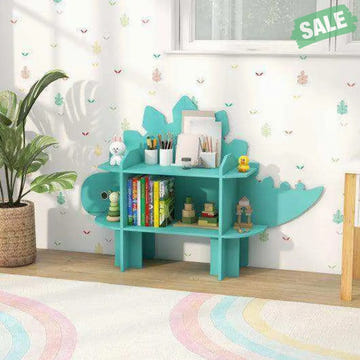
Kids Bookcase Shelf Toy Storage Organizer with Open ...
$109.00
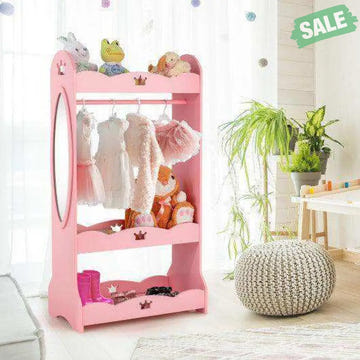
Kids Pretend Costume Closet with Mirror - Multi-Tier...
$108.99
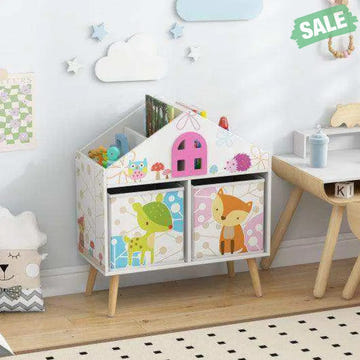
Kids House-shaped Bookshelf with 2 Storage Bins for ...
$61.99

Sweet Moments Cookies & Sweets Gift Basket
$49.95
Garden of Indulgence Gourmet Gift Basket with Tea & ...
$59.95
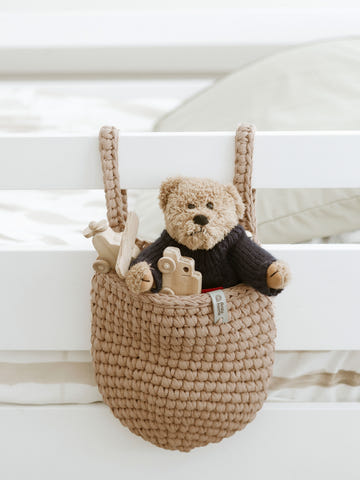
Crib Pocket Organizers
$54.00

12V Battery Powered Electric Vehicle with Remote Con...
$159.99
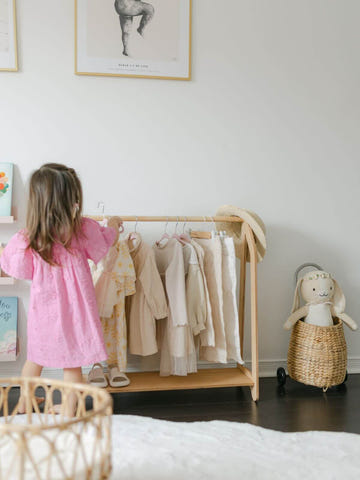
Montessori Clothes Rack (B2B)
$149.00
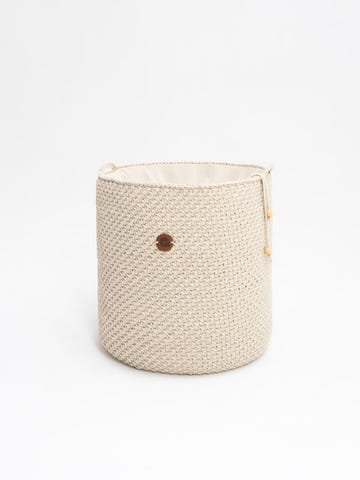
Nursery Laundry Hamper
$225.00